1

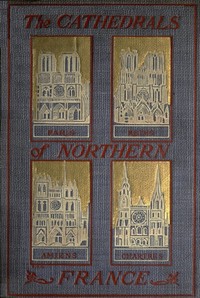
The Cathedrals of Northern France — Edition Insights
7
2
Project Gutenberg
2009
France -- Description and travel; Cathedrals -- France
Readers of public-domain and historical texts
Project Gutenberg digital edition
en
Edition facts
Words: 63,586
Reading time: 277 min
Text sections: 10
Source:
Project Gutenberg record #29820
An illustrated guide to the cathedrals of northern France, blending architectural description, historical anecdote, and travel observation. Mansfield examines structures like the west front with its quintette of portals and the Tour de Beurre, noting contrasts between Gothic and Renaissance elements, and the interplay of proportion, decoration, and regional character.
Editorial Edition Score
4.8/5
★★★★★
★★★★★
Calculated from edition completeness, EPUB availability, text structure and catalogue metadata. Not a user rating.
Edition quality
Mansfield opens his survey by distinguishing between two modes of travel writing: recounting the journey itself or its results. He opts for the latter, weaving together topographical, historical, artistic, and religious threads. The book is neither a dry architectural manual nor a personal travelogue; it is a cultivated synthesis that demands of its author a broad interest beyond any single specialty. Mansfield warns that purely technical writing risks oblivion unless leavened with statistics, compilation, and even the publisher’s perspective. This editorial note examines how the text balances technical observation with a wider cultural lens, focusing on the specific tensions and patterns visible in the excerpts.
The West Front as a Study in Contrasts
Mansfield’s description of the west front of an unnamed cathedral (likely Amiens or Notre-Dame de Paris) reveals a keen eye for architectural inconsistency. He notes a “quintette of portals, deeply recessed, but of a decidedly mixed Gothic and Renaissance treatment as to decoration.” This hybridity is not dismissed as failure; instead, Mansfield questions whether “varying detail” might produce a “more interesting, and perhaps as edifying a work for pleasurable contemplation.” The towers themselves embody contrast: the left-hand “Tour de Beurre,” built from butter-tax contributions, is florid and round-arched, while the right-hand tower is “much less imposing” but stylistically truer. Mansfield highlights a pair of “overlying buttresses of no apparent purpose as to staying power,” suggesting they anticipate future window openings. Such details show his willingness to read architecture as a living, evolving document rather than a fixed ideal.
Proportion Over Ornament: The Interior’s Measured Grandeur
Inside, Mansfield finds that the cathedral’s “great beauty may be said to be the magnificent proportions throughout, rather than the preëminent intrinsic value of any specific detail.” The interior’s length is exaggerated by the lack of transepts, while the height is magnified by three ranges of aisle openings and a double-tiered nave elevation of triforium and clerestory. Yet he is candid about shortcomings: the west rose window suffers from a “flatness and depression” in its lozenge-shaped circumference, and its glass and framing are mediocre. Sculptural decoration, he states, does not match the excellence of Reims or Amiens. The choir, however, earns the phrase “Burgundian opulence.” Mansfield’s judgments are grounded in comparative observation, not mere praise; he measures each feature against regional peers and finds both strengths and limitations.
The Author’s Method: Synthesis and Restraint
In his apologia, Mansfield explicitly outlines his method: “judicious selection and arrangement of fact, rather than a mere hazarding of opinions.” He acknowledges that many architectural conclusions can be “naught but conjecture” and may be misunderstood. This self-awareness shapes the book’s tone—authoritative yet cautious. He avoids sweeping claims about a cathedral’s “soul” or “spirit,” instead grounding remarks in observable features like the “long tentacle-like ligature” connecting a chapel to the main church, through which Henry James imagined organ groans transmitted with “distressing clearness.” Mansfield’s prose is precise: portals are “profusely decorated with sculptured forms of angels, saints, and kings”; the tympanum’s “Last Judgment” is noted for “magnitude and workmanship.” He rarely quotes more than a phrase from other writers, preferring his own measured descriptions. This restraint gives the text a durable, fact-based authority.
Readers approaching The Cathedrals of Northern France should expect a work that values proportion over ornament, synthesis over personal anecdote, and comparative judgment over unqualified praise. Mansfield’s willingness to note a cathedral’s flaws—a flat rose window, mediocre glass, or inconsistent towers—makes his praise of “Burgundian opulence” or “symmetrical grandeur” all the more credible. The book rewards those who read slowly, with a plan or photograph in hand, matching Mansfield’s observations to the actual stones.
Reader reflection
What was your reading experience?
Capture what you thought, learned, and would like to remember.
Your progress
0
/
10
2
Was reading this book enjoyable?
3
Is this a title you would suggest to others?
4
What was the reading difficulty like?
5
How did the reading compare with what you expected?
6
Was the book easy to understand?
7
How would you rate its originality?
8
Did any part of the book feel personally relevant?
9
What did this book teach you most?
10