1

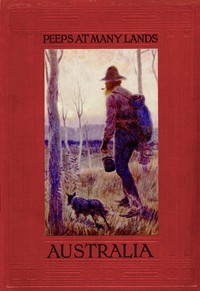
Peeps At Many Lands: Australia — Reading Notes
6
2
Project Gutenberg
2008
Australia -- Description and travel; Australia -- History
Readers of public-domain and historical texts
Project Gutenberg digital edition
en
Edition facts
Words: 26,114
Reading time: 114 min
Text sections: 4
Source:
Project Gutenberg record #25976
Frank Fox's 1911 travelogue blends fairy-tale framing with blunt observations on Australian wildlife, from koalas to Tasmanian devils, revealing a narrative voice that shifts between wonder and wry practicality.
Editorial Edition Score
4.6/5
★★★★★
★★★★★
Calculated from edition completeness, EPUB availability, text structure and catalogue metadata. Not a user rating.
Edition quality
Frank Fox opens his 1911 account of Australia with a fairy-tale conceit, calling the continent a "Sleeping Beauty" awakened by English sailors. This framing sets an expectant tone, but the narrative voice quickly shifts into something more pragmatic. In the chapter on animals, Fox describes the koala with affection—"a mother koala climbing sedately along a gum-tree limb, its young ones riding on it pick-a-back"—yet he also notes its near extermination due to "the senseless desire of small boys and 'children of larger growth' to kill something wild." The prose moves between wonder and blunt assessment, a pattern that defines the book's character.
A Fairy-Tale Frame and a Geologist's Caveat
Fox begins by likening Australia to a Sleeping Beauty, but immediately undercuts the romance with a geological caveat: "How Australia came to be in her curious isolated position in the very beginning is not quite clear." He notes that the continent is "very, very old as a continent—much older than Europe or America or Asia—and its story is a little blurred and uncertain." This tension between narrative polish and scientific hesitation recurs throughout. Fox uses the map's shape—"something like that of a pancake with a big bite out of the north-eastern corner"—to ground his description in concrete detail. The opening chapter thus establishes a voice that is both storyteller and explainer, willing to admit gaps in knowledge while pressing forward with vivid imagery.
Wildlife Described with Affection and Alarm
Fox's treatment of Australian fauna mixes close observation with conservationist concern. He describes the koala's "confiding and somewhat stupid nature" and notes that it is "almost exterminated in many places," though now protected by law. The wombat is called "a great nuisance" for burrowing into irrigation canals. Fox explains the fur trade's tricks—"Dealers in skins will sometimes dye the grey 'possum's skin black and trade it off as Tasmanian 'possum"—and warns buyers. The Tasmanian tiger, he reports, once had a £100 bounty on its head; the Tasmanian devil "has been known to attack man, springing on him from a tree branch." These passages reveal a narrator who is knowledgeable, opinionated, and unafraid to editorialize about human folly and ecological cost.
Pace and Voice: From Lyrical to Laconically Practical
The book's narrative pace varies markedly between chapters. The opening is leisurely, with extended metaphors and geological speculation. Later sections on animals and the bush become more brisk and anecdotal. Fox shifts from lyrical passages—"the fairy-story of the Sleeping Beauty might have been thought out by someone having Australia in his mind"—to terse, practical advice: "Bush lads catch the 'possum with snares." He even includes a wry aside about the bunyip: "there isn't the bunyip, so far as we know as yet." This change in tempo reflects the book's dual purpose: to enchant a young reader with a distant land while also delivering factual, sometimes cautionary, information about its wildlife and settlement.
Readers should note that Fox writes from a pre-Federation perspective—Australia became a Commonwealth in 1901, only a decade before this book—and his tone is shaped by Edwardian attitudes toward empire and nature. The illustrations by Percy F. S. Spence complement the text's mix of wonder and reportage. Approach the book as a period piece that reveals as much about the author's worldview as about Australia itself.
Reader reflection
What was your reading experience?
Capture what you thought, learned, and would like to remember.
Your progress
0
/
10
2
How much did you enjoy the reading experience?
3
Would you recommend this book to another reader?
4
How demanding did the text feel?
5
Did anything about the book feel genuinely new?
6
How personally connected did you feel to the book?
7
How useful were the ideas in this book?
8
Which aspect of the book did you value most?
9
What changed or sharpened your thinking?
10