
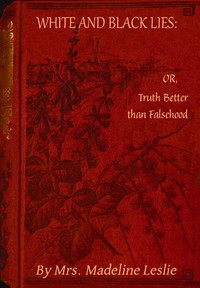
White and black lies : Or, truth better than falsehood by Madeline Leslie
Let's be honest—we've all bent the truth a little. Madeline Leslie's 1859 novel, White and Black Lies, takes that common human habit and explores its consequences with the careful eye of a 19th-century moralist, but in a way that still feels relevant today.
The Story
The book centers on the Maynard family. It starts with small, seemingly innocent deceptions. A daughter, Mary, hides a minor mistake. A son, Arthur, exaggerates a story to look better in front of friends. Their parents, Mr. and Mrs. Maynard, aren't perfect either; they sometimes use 'polite falsehoods' to smooth over social awkwardness. Leslie shows how these 'white lies' create a pattern. One small untruth requires another to cover it, leading to confusion, hurt feelings, and a gradual erosion of trust within the family. The 'black lies' of the title represent the more serious, intentional deceptions that this slippery slope can lead to. The plot isn't about a huge, dramatic crime, but about the quiet, domestic crisis that unfolds when people who love each other can no longer be sure they're hearing the truth.
Why You Should Read It
What grabbed me was how this book acts as a mirror. Leslie doesn't just preach; she sets up situations where you think, 'Okay, I probably would have said that too.' Then she shows the unintended fallout. The characters are not villains—they're regular people making flawed choices, which makes their struggles believable. The central theme—that truth, however difficult, builds stronger foundations than convenient fiction—is simple but powerful. Reading it in the 21st century, with our own complicated relationship with 'spin' and image, adds an extra layer. It's a slow, thoughtful read that makes you pause and examine your own communication habits.
Final Verdict
This is a book for readers who enjoy classic domestic fiction and character studies. If you like the moral dilemmas in authors like Louisa May Alcott or Maria Edgeworth, you'll appreciate Leslie's style. It's also perfect for anyone interested in the social history of the 1800s and how people of that era grappled with everyday ethics. Fair warning: it's a book of its time, so the pacing is deliberate and the lessons are clear. But if you're in the mood for a quiet, insightful story that will make you think long after you close the cover, this forgotten gem is worth tracking down.
No rights are reserved for this publication. You can copy, modify, and distribute it freely.
Barbara Scott
3 months agoI came across this while browsing and the content flows smoothly from one chapter to the next. Exactly what I needed.



Kevin Anderson
1 year agoI started reading out of curiosity and the arguments are well-supported by credible references. Thanks for sharing this review.