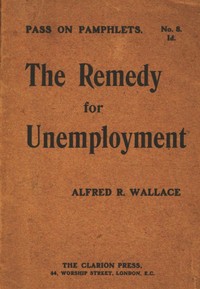
The Remedy for Unemployment by Alfred Russel Wallace
Alfred Russel Wallace is famous for co-discovering natural selection, but later in life, he became deeply troubled by the social problems of the Industrial Age. The Remedy for Unemployment is his direct response. He starts from a simple observation: new machines were supposed to make life easier for everyone, but instead, they were putting people out of work and creating a permanent class of the desperately poor. Wallace argues this isn't an accident or a temporary glitch—it's a fundamental flaw in how society is organized.
The Story
There's no traditional plot with characters. Instead, Wallace builds a logical case, step by step. He points out that unemployed workers still need food, shelter, and clothing. The land exists to provide these things, but it's privately owned. His big idea? That the government should buy up unused or poorly used land and establish what he calls 'Home Colonies.' These would be self-sufficient communities where the unemployed could work the land, grow their own food, build their own homes, and create goods for themselves and for trade. He saw it not as charity, but as a practical way to put idle hands and idle land to productive use, breaking the cycle of poverty.
Why You Should Read It
Reading this is like having a time capsule conversation with a fiercely intelligent and compassionate mind. What struck me most wasn't just his solution, but his clear-eyed anger at the waste of human potential. He writes with the conviction of a scientist who has identified a problem and is determined to fix it. While his specific 'Home Colony' plan might seem quaint today, the core question he asks is timeless: How do we build an economy where technological progress benefits everyone, not just a few? In an age of AI and job displacement, his concerns feel incredibly current.
Final Verdict
This book is perfect for anyone interested in the history of economic thought, social justice, or just brilliant minds tackling big problems. It's also surprisingly short and readable. Don't expect a polished modern policy brief; expect a provocative, heartfelt manifesto from a man who believed a better world was not only possible but necessary. If you've ever wondered what the co-founder of evolutionary theory thought about poverty, here's your chance to find out.
No rights are reserved for this publication. You are welcome to share this with anyone.