
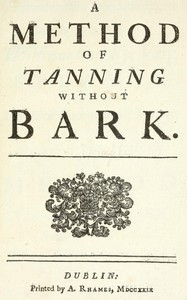
A Method of Tanning without Bark by William Maple
So, what's this book actually about? A Method of Tanning without Bark is part technical pamphlet, part personal manifesto. It lays out William Maple's case for his revolutionary process. The core of the story is simple: in the 1790s, Maple believed he had perfected a way to turn animal hides into durable leather without using the vast quantities of oak bark that were the industry's lifeblood.
The Story
The plot follows Maple's uphill battle. He presents his method to the public, touting its benefits: it's cheaper, it doesn't require forests to be stripped bare, and it eliminates the horrific smell that made tanneries neighborhood pariahs. But instead of celebration, he meets a wall of hostility. The established tanners' guilds, whose entire trade was built on the old ways, attack his credibility. They question his results, spread rumors, and likely used every trick in the book to shut him down. The book itself is his public defense—his attempt to go over the heads of the industry and appeal directly to the public and to progressive thinkers. It's a one-man campaign against tradition.
Why You Should Read It
You should read it because it's a perfect, compact snapshot of how innovation really happens—or doesn't. It's not about a lone genius getting a parade. It's about the gritty, frustrating work of convincing people to change. Maple's voice, even through the formal language of the time, comes through as passionate and stubbornly defiant. You feel for him. He's not just selling a product; he's trying to fix what he sees as a wasteful, broken system. The themes are huge: progress vs. tradition, the environment vs. industry, and the sheer difficulty of being right when everyone in power says you're wrong.
Final Verdict
This is a hidden gem for anyone who loves stories about underdog inventors, the history of everyday things, or the messy birth of new ideas. It's not a long novel; it's a primary source that reads like a thriller for nerds. Perfect for history buffs who like 'bottom-up' stories, fans of books like The Ghost Map, or anyone who's ever tried to change a stubborn person's mind and felt that familiar surge of frustration. You'll never look at a leather belt the same way again.
Ashley Garcia
1 year agoBeautifully written.



Emily White
5 months agoI started reading out of curiosity and it creates a vivid world that you simply do not want to leave. Thanks for sharing this review.